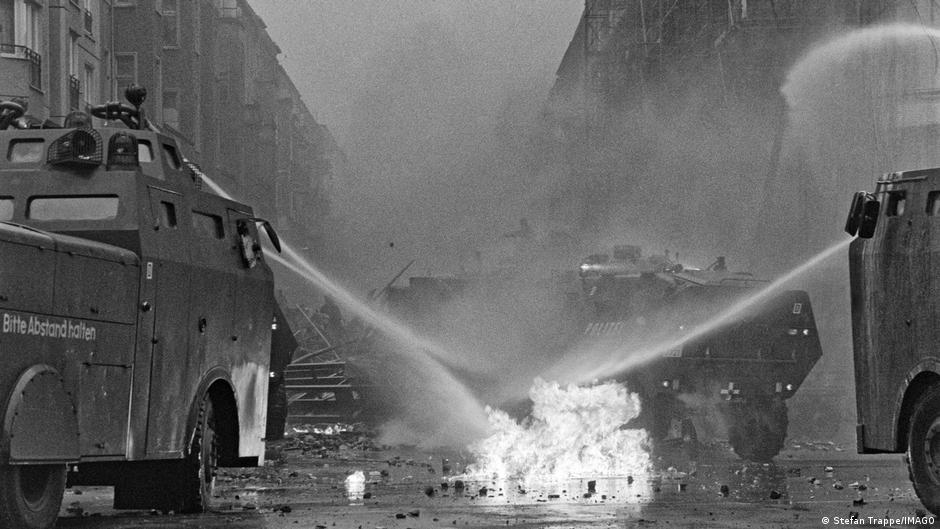
Berlin has a reputation for being unruly. When Jospeh Goebbels was appointed the Nazi Party's district leader in 1926, he described Berlin as "the reddest city in Europe besides Moscow." From the Tailors' Revolution of 1830 and the barricades of 1848, to the rise of a vast industrial working class later in the 19th century, revolution, protest and rebellion run deep throughout the city's history. While the future German philosopher and revolutionary socialist Karl Marx was still in high school in the small town of Trier in Prussia's Rhine Province, Berlin was fast becoming a center of the country's labor movement.
Mostramos publicamente o ponto principal. Crie uma conta gratuita para continuar lendo o artigo completo, salva-lo, comenta-lo e conecta-lo ao contexto de mercado e OSINT.