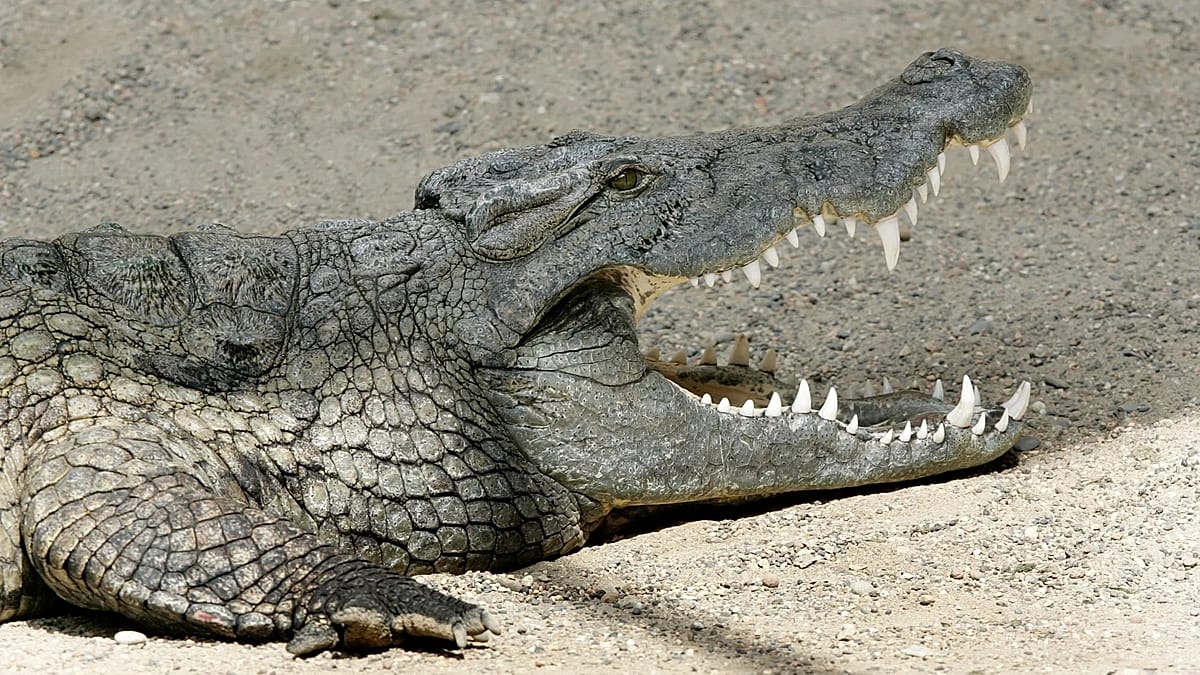
Scientists have identified a new crocodile genus from a 45-million-year-old Egyptian fossil after using CT scans to re-examine a skull recovered nearly a century ago. The fossil comes from the Mokattam Formation, the same limestone formation from which the Great Sphinx was carved. Like the monument, the skull is missing the tip of its snout. Researchers from Egypt, the UK, Sweden and Germany have named the animal Herugavialis cairensis. The findings were published in Royal Society Open Science. The animal was first described in 1927 as Tomistoma cairense, placing it in the same genus as the living false gharial, which has a long, narrow snout.
Wir zeigen den wichtigsten Punkt oeffentlich. Erstellen Sie ein kostenloses Konto, um den vollstaendigen Artikel zu lesen, ihn zu speichern, zu diskutieren und mit Markt- und OSINT-Kontext zu verbinden.