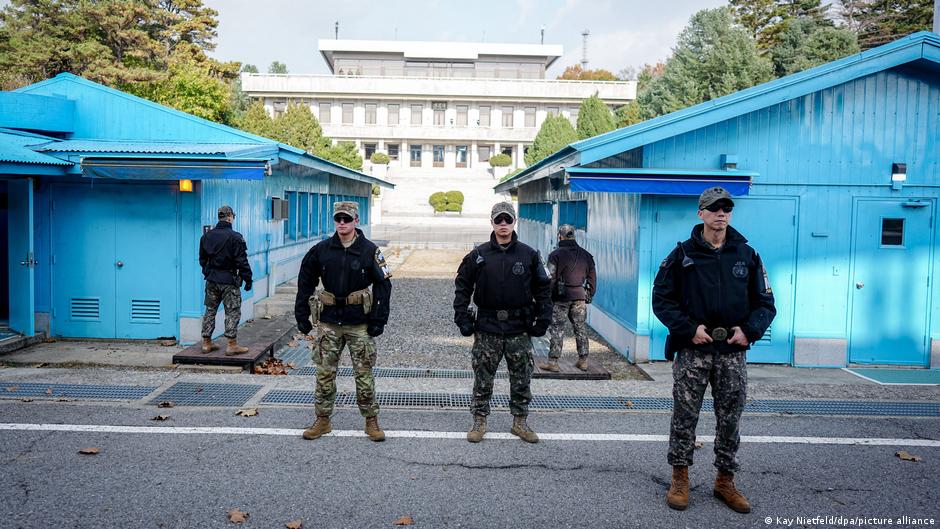
The story of South and North Korea — two rival nations that share history, language and much of their cultural heritage — sounds very familiar to Germans . Their own country spent decades divided by opposing regimes until geopolitical winds shifted and allowed East and West Germany to reunite peacefully in 1991 . Just two years later, Germany's then-Chancellor Helmut Kohl visited the Demilitarized Zone (DMZ) on the Korean Peninsula and expressed hope that South and North Korea will also be reunited by the end of the decade. His hopes never materialized. Some 35 years since Germany achieved its dream of reunification, Seoul and Pyongyang are still bitterly divided by political systems, economy, and their geopolitical alliances .
We show the main point publicly. Create a free account to continue reading the full article, save it, discuss it, and connect it with market and OSINT context.